


Newsela launched in 2013 with a bold mission: Meaningful classroom learning for every student. Today, our team constantly strives to deliver powerful solutions that inspire our users.
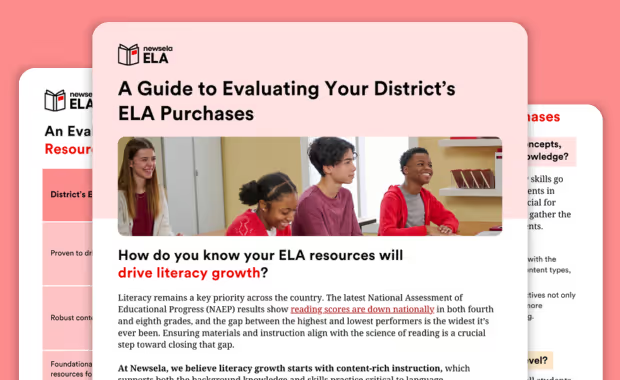
A Guide to Evaluating Your District’s ELA Purchases
April 18, 2025
Pillar: Science of Reading
A Guide to Evaluating Your District's ELA Purchases
Evaluate your district’s ELA purchases with a strategic framework focused on instructional quality and long-term value. This guide outlines the criteria needed to align materials with the science of reading, ensuring that your investment effectively closes literacy gaps across K–12 classrooms.
Evaluation Pillars
Content-Rich Instruction
Build background knowledge and literacy skills hand-in-hand.
Accessibility & Support
Grow all learners through differentiation and scaffolded texts.
Skill-Building Practice
Pair priority skills with engaging, relevant content for students.
Strategic Advantages
Evaluate materials for standards alignment, rigor, and diverse perspectives.
Assess instructional flexibility to ensure content is accessible for every student, regardless of reading level.
Consider teacher usability by identifying resources that reduce the burden of creating manual scaffolds.
Identify gaps in background knowledge-building and skill progression.
Make confident decisions based on evidence-backed criteria and the science of reading.
A Guide to Evaluating Your District’s ELA Purchases
Pillar: Science of Reading
A Guide to Evaluating Your District's ELA Purchases
Evaluate your district’s ELA purchases with a strategic framework focused on instructional quality and long-term value. This guide outlines the criteria needed to align materials with the science of reading, ensuring that your investment effectively closes literacy gaps across K–12 classrooms.
Evaluation Pillars
Content-Rich Instruction
Build background knowledge and literacy skills hand-in-hand.
Accessibility & Support
Grow all learners through differentiation and scaffolded texts.
Skill-Building Practice
Pair priority skills with engaging, relevant content for students.
Strategic Advantages
Evaluate materials for standards alignment, rigor, and diverse perspectives.
Assess instructional flexibility to ensure content is accessible for every student, regardless of reading level.
Consider teacher usability by identifying resources that reduce the burden of creating manual scaffolds.
Identify gaps in background knowledge-building and skill progression.
Make confident decisions based on evidence-backed criteria and the science of reading.