10 Winter Olympic Games Classroom Activities

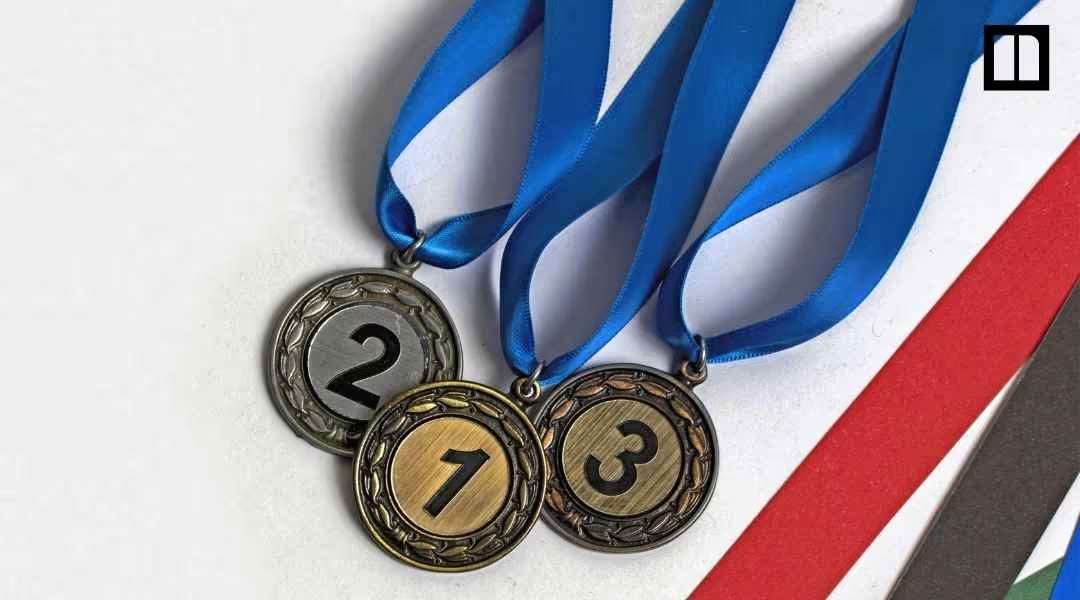
Close-up of gold, silver, and bronze Olympic medals numbered 1, 2, and 3 with blue ribbons, laid over decorative green, red, and yellow ribbons.

Christy Walters

January 6, 2026

The Winter Olympic Games are a perfect foundation for engaging classroom lessons. From reading and research to physics and weather, students can explore real-world concepts through stories of athletes, events, and innovation.

Key takeaways:

  • Engage students across subjects with ELA, math, and science lessons for cross-curricular connections.
  • Promote critical thinking and collaboration through debates, discussions, and reflections.
  • Make learning relevant and interactive with athlete biographies, science datasets, and stories from previous Winter Olympic Games.

Jump to:


[ELA lessons to help students explore the Winter Olympic Games](id-ela)

Key takeaways:

  • Students can explore history, athlete stories, and current events using differentiated texts. 
  • Structured activities help students practice debate, reflection, and writing skills while engaging with Winter Olympics content.
  • Newsela ELA lessons support research, critical thinking, and life skills development while focusing on high-interest topics.

How can students build research skills using the Winter Olympics as a topic?

Boost research skills by asking students to complete a project on the Winter Olympics. They can choose from topics that spark curiosity, like:
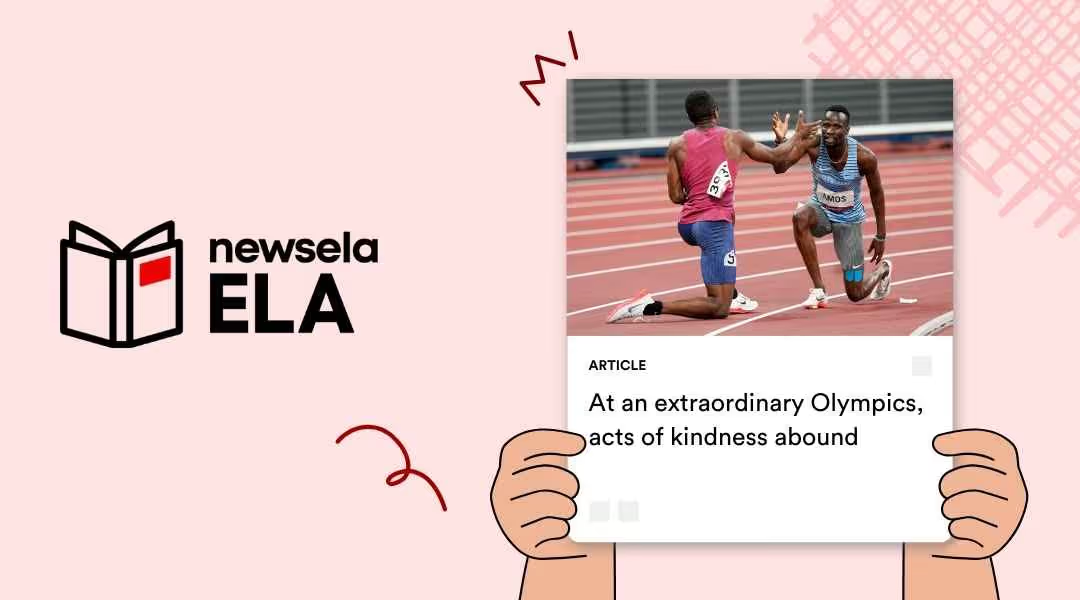
How can Olympians teach us about kindness and community?

A Newsela ELA article titled "At an extraordinary Olympics, acts of kindness abound," showing two runners on a track helping and encouraging each other after a race.

Teach students about camaraderie and sportsmanship using Olympians as a model.  Try this activity: 

What can students learn about athletes’ performance and the potential of setting world records?

Students can debate and discover what it takes to set or break a world record in any sport with this activity:

  • Split the classroom into “yes” and “no” sides and ask students to vote on questions like: “Athletes should receive consequences for cheating,” or “Sports will become boring if athletes don’t set new records.”
  • Have students read an article about how factors like conditioning, diet, and technological improvements have impacted how we track world records since the beginning of the modern Olympic Games.
  • After reading and learning more about world records, ask students if their opinions changed on any of the topics.

How can the Winter Olympics help students discuss bullying and positive attitudes?

A Newsela ELA article titled "Online bullies once made Douglas cry, so now the Olympian is fighting back," showing a smiling Gabby Douglas during an interview.

Many Olympic athletes use their platforms to enact change and promote worthy causes. Students can learn about gymnast Gabby Douglas’ campaign to end cyberbullying to teach about kindness in all areas of life:

How can students decide if athletic competition is healthy?

Is competitive nature a good or a bad thing? Have students debate this topic by exploring different points of view with articles on topics like:

What happens at the Winter Olympics?

A Newsela ELA article titled "What Olympic athletes wear is often more about science than style," featuring short-track speed skaters in aerodynamic racing suits competing on the ice.

Teach students about how the host cities prepare for the Winter Olympics, athletes train, and other things that happen to pull off this worldwide event. They can learn:

Who are some athletes who have broken barriers at the Winter Olympic Games?

Help students explore equity, perseverance, and representation using the stories of trailblazing Winter Olympic athletes. Try this lesson in your classroom:

  • Read about Chloe Kim, a snowboarder who made Olympic history in halfpipe.
  • Read about how a South Korean Paralympic skier earned the respect and awe of his fellow athletes.
  • Have students compare and contrast the experiences of both athletes using a Venn Diagram

[Science lessons to connect phenomena to the Winter Olympics](id-sci)

Key takeaways:

  • Students can investigate physics, energy, and motion through snowboarding and other Winter Olympics sports. 
  • Use hands-on datasets to help students apply math and science to real-world situations.
  • Explore how climate can affect Winter Olympic sports and athlete success.

How can snowboarding teach physics, energy, and speed?

A Newsela STEM article titled "Olympic big air snowboarders use physics to their advantage," featuring a photo of a snowboarder performing a mid-air flip against a blue sky.

Use real athlete data to explore motion, potential and kinetic energy, incline angles, and trick height. Students can complete analysis questions and predict outcomes using the following lesson:  

  • Read about how Olympic athletes are doing more intricate tricks in snowboarding with each new event.
  • Dig into the snowboarding dataset to see how athletes perform in competition.
  • Using what students learned from the reading and exploring the dataset, have them complete math activities like analyzing the incline angle and its impact on speed, or predicting the potential energy of a hill with a set height.

How can the climate affect sports and the Winter Olympics?

Use this lesson to teach students about climate change and its effect on sports. Throughout the lesson, you can cover:

Extend the lesson by asking students to brainstorm ways to prevent climate change in their town and write a proposal to town leaders to make one of their initiatives happen.

How can ice melt affect Olympic venues?

A Newsela STEM article titled "There are three phases of matter: solid, liquid and gas," featuring a diagram of an ice cube, a puddle of water, and a cloud with molecular structures shown below.

Explore why salt melts ice and how temperature can affect frozen surfaces and athletes’ performance. Help students apply science concepts to real-world scenarios using the following activity:

How can I teach Winter Olympics science concepts with video?

Newsela STEM with Generation Genius science videos makes it easy to teach the concepts behind the Winter Olympics in a fun, engaging way for any grade band. Try these selections from our library:

K-2 Science:

3-5 Science:

6-8 Science:

How can Newsela keep students engaged year-round?

Newsela provides timely, differentiated texts that engage students beyond seasonal events like the Winter Olympics. Connect breaking news and global events to reading, writing, and STEM skills. 

If you’re not a Newsela customer yet, sign up for Newsela Lite and try our premium differentiated content and activities for free.

Newsela Lite Hero Hands

Everything you need to accelerate learning across ELA, social studies, and science

Try Newsela Lite for Free

If you like this article...

Browse more educational and seasonal content from Newsela.
Blog

Go for the Gold With Activities for the Summer Olympic Games

Engage your students with ELA activities about the Summer Olympic Games and how they’ve changed over time.
Blog

Hockey Lessons to Get Ready for the Stanley Cup Finals

Find hockey lessons to capitalize on students' interest in sports and the Stanley Cup Finals in their ELA and science classes.

Blog

Hit a Free Throw With These NBA Finals Basketball Activities!

Discover how to generate student interest by adding basketball and NBA Finals content to your lessons this spring.

Related resources

Explore more in-depth content on the education topics that matter in your schools and classrooms.
No items found.

Inspire the desire to learn.

Ready to engage, support, and grow every learner?