
Products

 Products Overview
Newsela products are purpose-built to unlock student motivation, inspire teachers, and drive long-lasting learning outcomes.









Resources
About
Products OverviewNewsela products are purpose-built to unlock student motivation, inspire teachers, and drive long-lasting learning outcomes.

Pi Day may not be a major holiday, but it’s a great excuse to make math feel engaging and relevant. With the right Pi Day activities, you can help your students explore where math comes from, how it’s used, and why it matters.
Whether you teach math or another subject, you can build background knowledge, reinforce K-12 math skills, and make learning a little more fun this March.
Jump to:
Key takeaways:
Pi Day gives you a chance to introduce even your youngest students to the history behind math traditions and the people who shaped them.
By grounding Pi Day activities in a historical context, you can help students see math as meaningful, human, and connected to the world instead of just being numbers on the page.
We celebrate Pi Day on March 14 because the date, 3/14, represents the first three digits of Pi. This tie-in helps you introduce the mathematical constant in a way even young students can understand. Exploring how Pi Day began helps students learn how mathematical ideas connect to everyday life.
These resources support background knowledge by explaining what pi represents, how we use it in math, and why it’s significant enough to have its own holiday. Use this lesson to:

Many concepts students learn today trace back to ancient civilizations, especially ancient Greece. Learning about early mathematicians and scientific tools helps students recognize that math is built over time through observation, experimentation, and problem-solving.
Use articles that give students historical context on topics like:
Key takeaways:
Math concepts like pi, patterns, and number relationships show up in nature, science, and technology. These Pi Day activities help you connect abstract math ideas to real-world applications that students can observe, analyze, and discuss.
From plant growth to numerical sequences found in nature, math can help us explain how the world works. Introducing these examples teaches students that math is a tool for understanding natural systems, not just for solving equations!
Use these resources to build context and show students how scientists use mathematical thinking to identify patterns, make predictions, and explain real-world phenomena with topics like:
Using Newsela STEM with Generation Genius math videos helps you reinforce math standards while breaking down challenging concepts into clear, engaging explanations. Videos provide visual models that support conceptual understanding and make abstract ideas easier for students to grasp.
Each video lesson also includes a 5E lesson plan, key vocabulary, and discussion questions to minimize the prep you need to do to bring these concepts to life for your students.
Try these video selections to tailor your instruction by grade band and reinforce key math skills for Pi Day learning:
K-2 Math:
3-5 Math:
6-8 Math
Key takeaways:
Pi Day isn’t just for STEM. It’s also an opportunity to build literacy skills while reinforcing math concepts. By anchoring reading and discussion in engaging topics like food, history, and real people, you can help students practice comprehension and analysis while keeping math front and center.
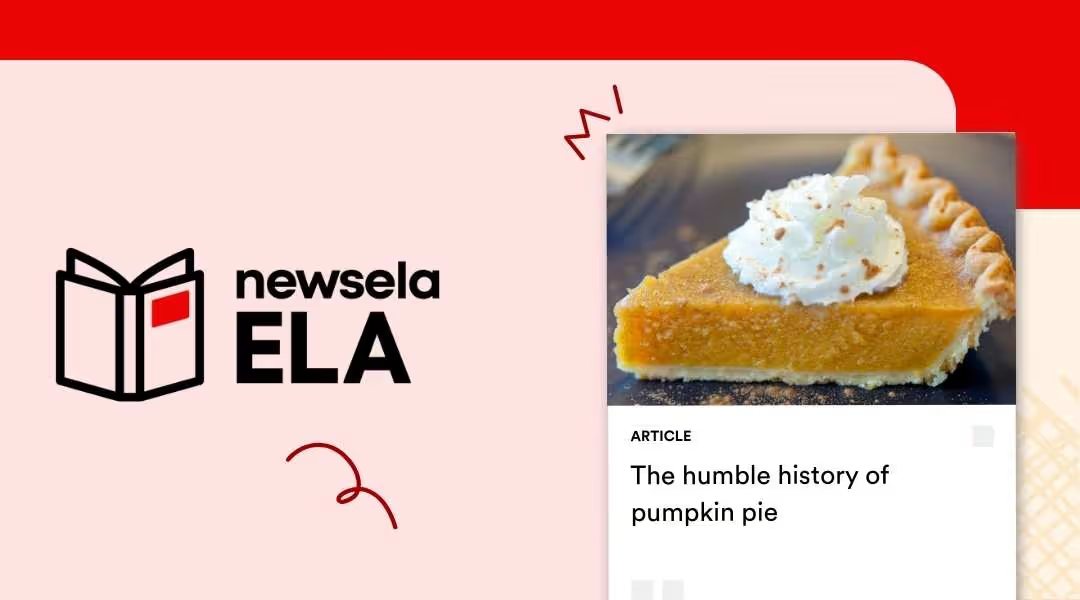
Turning Pi Day into “pie” day gives you an easy hook for building background knowledge through informational texts. Learning how familiar sweet treats became popular helps students practice reading for detail, cause, and effect, and historical context, while aligning with Pi Day themes.
These resources let students explore the cultural and historical stories behind favorite desserts by:
Sharing stories of contemporary mathematicians and STEM leaders helps students see how math skills extend far beyond the classroom. These examples connect math to athletics, technology, and social impact. Share articles on topics like:
Pi Day is just one moment in the school year, but the skills it helps students build last much longer. With Newsela’s subject products, you can keep students engaged year-round using timely, standards-aligned content across disciplines.
Not a Newsela customer yet? Create an account to start your 45-day free trial to access premium content and activities that support math, literacy, and STEM instruction all year long.


Find engaging school-centered ELA activities to help students of all grade levels acknowledge and celebrate the 100th day of school.
Discover ELA activities for Friday the 13th to better understand why some people are superstitious about this particular unofficial holiday.

Celebrate National STEM Day with hands-on projects, STEM career resources, videos, simulations, diagrams, and classroom activities for K–12 students.


.jpg)
.jpg)