
Products

 Products Overview
Newsela products are purpose-built to unlock student motivation, inspire teachers, and drive long-lasting learning outcomes.









Resources
About
Products OverviewNewsela products are purpose-built to unlock student motivation, inspire teachers, and drive long-lasting learning outcomes.

As an elementary teacher, sometimes literacy can feel like your whole job. From decoding to vocabulary, comprehension to writing, you’re often hammering these ideas home day after day to students who all read at very different levels.
The good news? Strong elementary literacy doesn’t come from just doing more over and over. It actually comes from doing a few core things consistently and giving students meaningful reading and writing work every day.
Jump to:
Key takeaways:
Strong elementary literacy grows from consistent instruction, meaningful texts, and daily opportunities for students to read, talk, and write about ideas.
Decades of research show that effective reading instruction focuses on a set of core skills working together. The National Reading Panel identified phonemic awareness, phonics, fluency, vocabulary, and comprehension as essential parts of reading development. When students practice these skills together, reading growth accelerates.
But at the same time, reading isn’t just about the mechanics of decoding words. Students also need knowledge, context, and a reason to care. When they read about science topics, historical events, and real-world ideas, they build background knowledge that supports stronger comprehension later.
Elementary literacy is bigger than just teaching students how to read words on a page. It includes the full set of skills students need to read, understand, discuss, and write about texts.
In the early elementary grades, students spend much of their time learning how written language works. They practice hearing sounds in words, connecting sounds to letters, and decoding unfamiliar words.
As students grow, literacy expands to include vocabulary, fluency, comprehension, and writing. These skills help students continue “learning to read” while also increasing their ability to “read to learn.” Strong elementary literacy instruction brings these pieces together through daily reading, discussion, and writing. In many classrooms, that looks like:
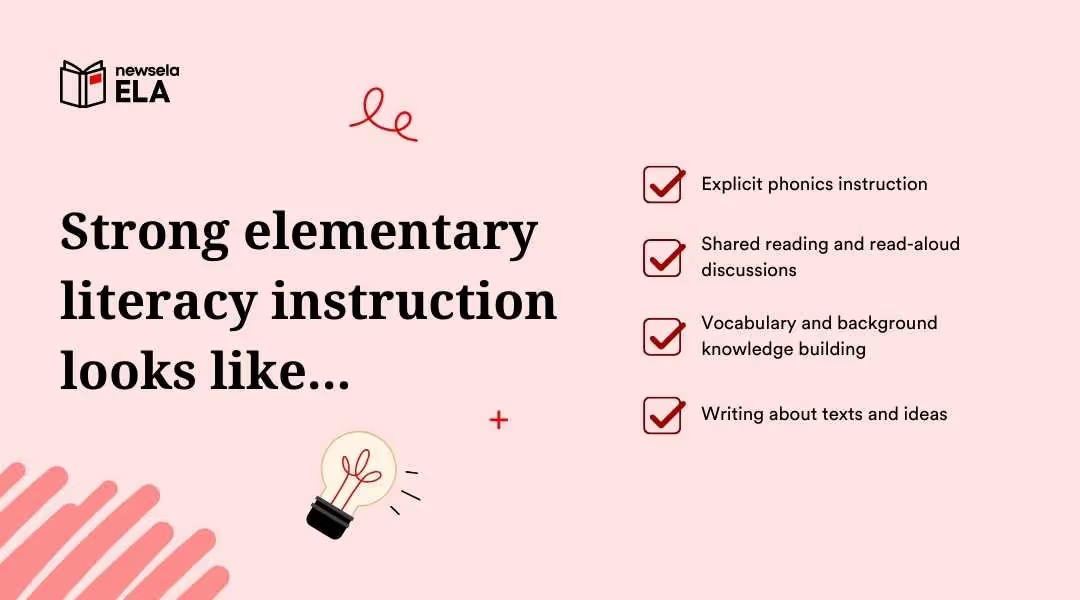
Teachers benefit from using tools that help introduce literacy concepts in ways that immediately capture students’ attention.
For example, Generation Genius ELA Video Lessons within Newsela ELA provide teachers with a whole-class entry point for introducing literacy skills. These short videos feature engaging characters and are designed to spark curiosity while introducing skills like main idea, story elements, vocabulary, grammar, and foundational reading skills.
Reading isn’t an innate skill the way speaking is. Most students need direct, systematic instruction to learn how written language works.
That’s why literacy research consistently highlights the importance of explicit instruction. The landmark National Reading Panel report found that structured instruction in phonemic awareness, phonics, fluency, vocabulary, and comprehension significantly improves reading outcomes for elementary students.
In practice, explicit instruction usually follows a simple structure:
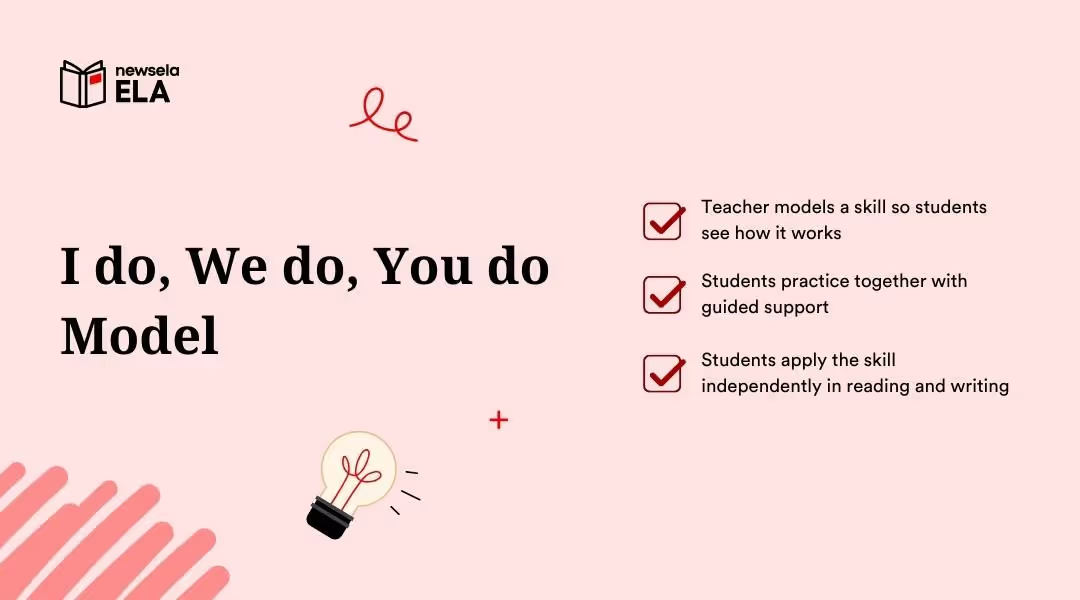
You probably already use this pattern during phonics lessons, guided reading, or writing mini-lessons. But explicit instruction also works well when students first encounter a new literacy concept.
Explicit instruction doesn’t mean scripted teaching. It simply means that you demonstrate to students how a skill works before gradually releasing responsibility and asking them to do it on their own.
Read more: Mastering the “I Do, We Do, You Do” Model
Comprehension gets easier when students already know something about the topic they’re reading.
If a student reads a passage about volcanoes, but has never heard of lava, magma, or tectonic plates, decoding the words won’t be enough. They’ll still struggle to understand the text.
Researchers have long pointed out that background knowledge is a major factor in reading comprehension. The RAND Reading Study explains that understanding text depends not only on reading skills, but also on the knowledge readers bring to the topic.
That’s why strong elementary literacy instruction includes content-rich reading experiences. Instead of practicing skills in isolation, students read about:
These texts build vocabulary, context, and understanding that students use when reading future material.
Newsela provides thousands of classroom-ready texts and videos from more than 175 content partners. This allows you to introduce real-world topics that help build background knowledge while students practice reading skills. You can use Newsela to:
This type of shared knowledge base leads to better discussions, stronger writing, and deeper comprehension.
Learn more: How To Build Background Knowledge While Driving Literacy Outcomes [Video]
Reading improves when students talk and write about what they read. Discussion helps students process ideas, and writing helps them organize those ideas and explain their thinking.
The What Works Clearinghouse practice guide recommends structured discussion and writing activities to strengthen comprehension for elementary students. This can be easy to build routines right into your literacy block with:
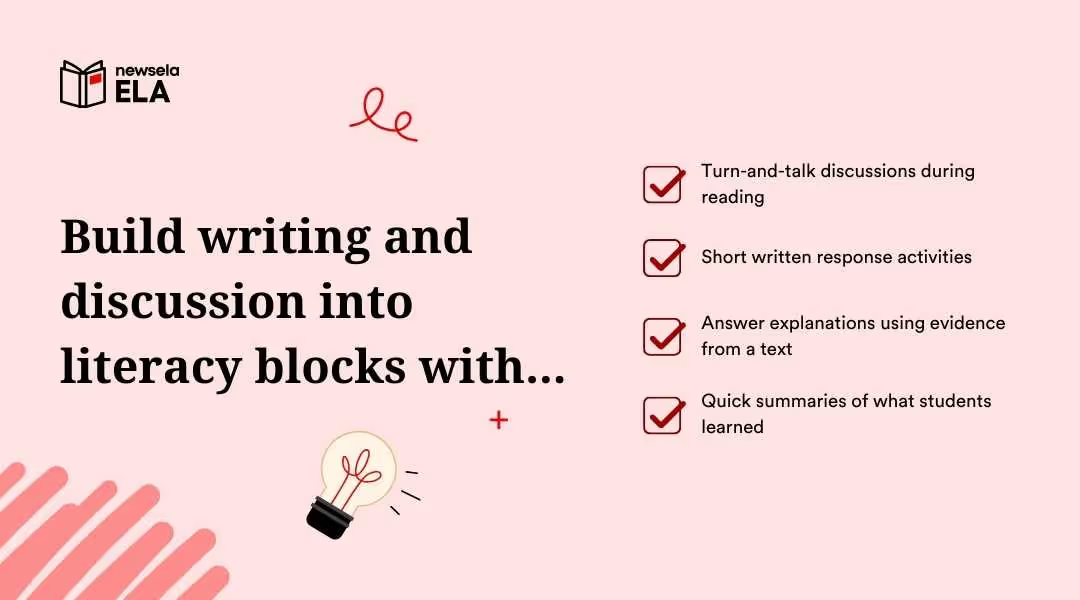
These activities push students beyond simply reading a passage. They help students analyze ideas, connect information, and explain their thinking.
Key takeaways:
Strong elementary literacy instruction focuses on several core skills working together. You’ve probably heard them described as the five pillars of reading:
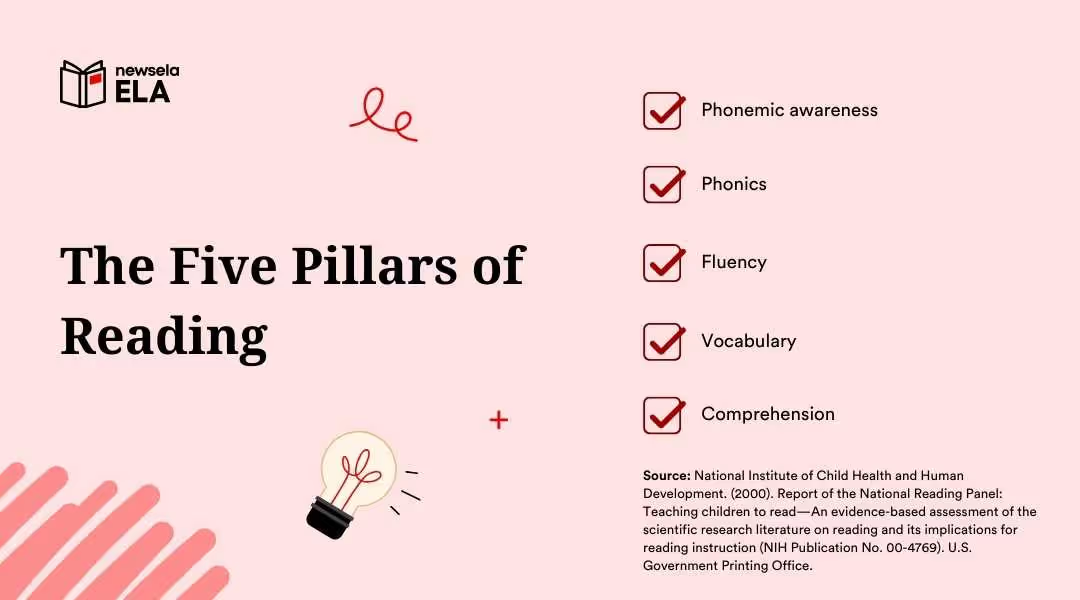
In real classrooms, these skills rarely appear in isolation. A typical literacy block might include a phonics routine, shared reading, vocabulary work, and a writing response, all within the same lesson.
The goal is to connect these skills so students can read, understand, and think about texts more effectively. Many teachers also anchor these skills in meaningful reading experiences. For example, students might learn a vocabulary word, encounter it in a text, discuss its meaning, and then use it in writing later in the lesson.
When literacy instruction connects skills with meaningful content, students see reading as more than just a school task. It becomes a way to understand the world.
Phonemic awareness is the ability to hear and work with the individual sounds in spoken words.
Before students can connect letters to sounds, they need to recognize that words are made up of smaller sound units called phonemes. For example, the word “cat” contains three phonemes:
/c/ /a/ /t/
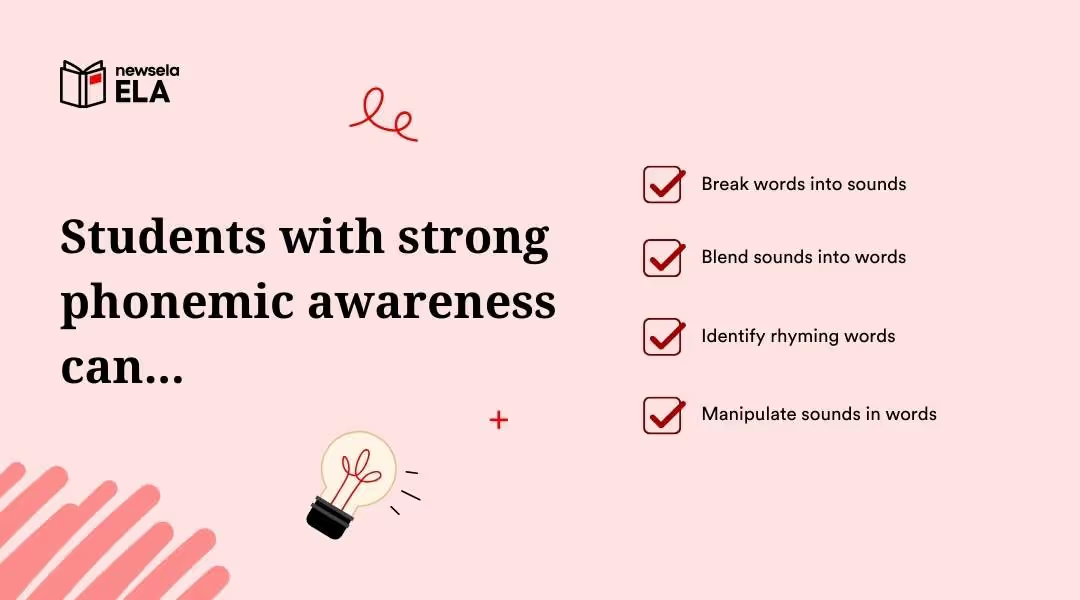
Students with strong phonemic awareness can:
Research shows that phonemic awareness is one of the strongest early predictors of reading success. The National Reading Panel found that teaching these skills explicitly improves early reading development.
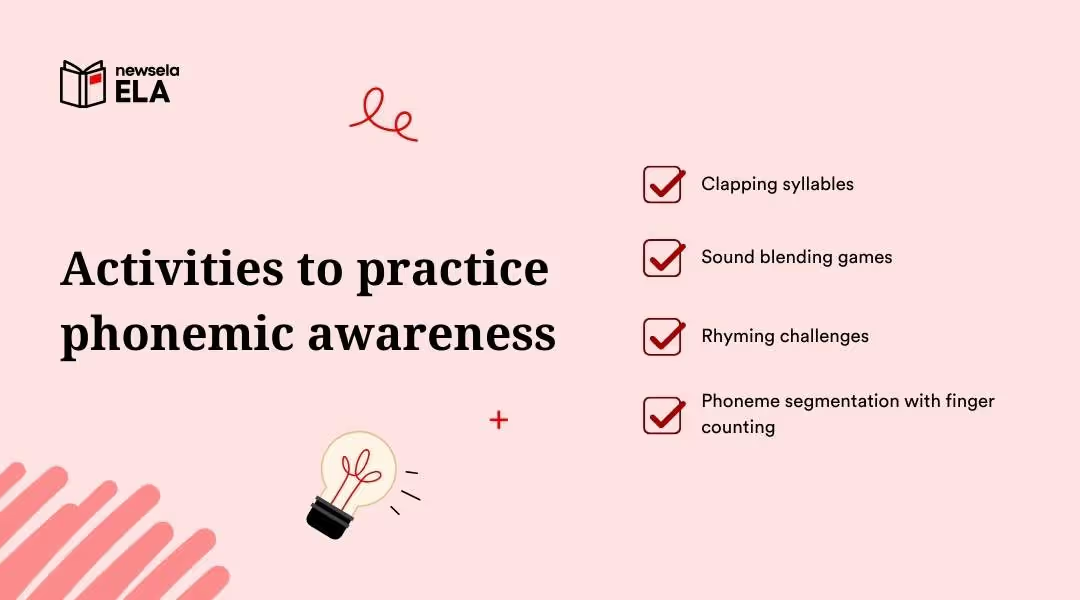
Many teachers include 5–10 minutes of daily phonemic awareness practice using quick routines like:
These short activities help students build the sound awareness they need before moving into phonics instruction. Once students understand that words are made up of sounds, they’re ready to start connecting those sounds to letters—and that’s where phonics comes in.
Phonics teaches students how sounds connect to letters and spelling patterns. This knowledge helps students decode unfamiliar words instead of guessing them.
Research consistently shows that systematic phonics instruction improves early reading development, especially in kindergarten through second grade. In the classroom, phonics instruction often follows a clear structure:
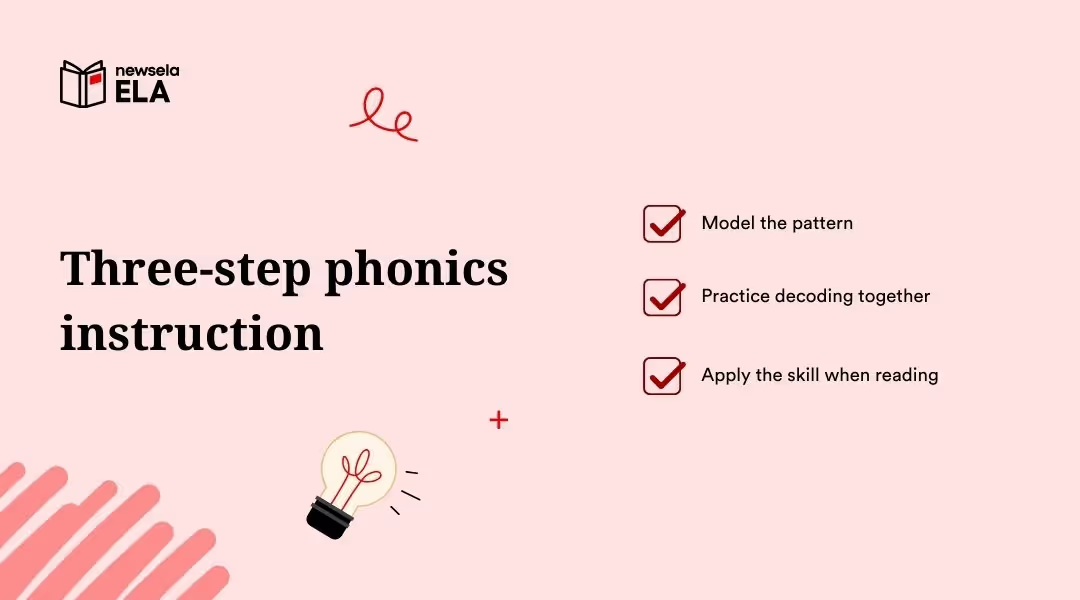
Decoding practice becomes more meaningful when students see phonics patterns inside stories, informational texts, and classroom reading. You can reinforce phonics by connecting it to authentic reading materials. Over time, that decoding ability builds confidence and independence as readers.
Fluency is the ability to read accurately, smoothly, and with expression. When students read fluently, they don’t have to stop and decode every word. That frees up their attention to focus on understanding the text.
Researchers often describe fluency as the bridge between decoding and comprehension. If reading is slow or choppy, students spend so much effort figuring out words that it becomes harder to follow the meaning of a passage.
Strong fluency instruction typically includes repeated reading and teacher modeling. You can build fluency practice into daily literacy routines through activities like:
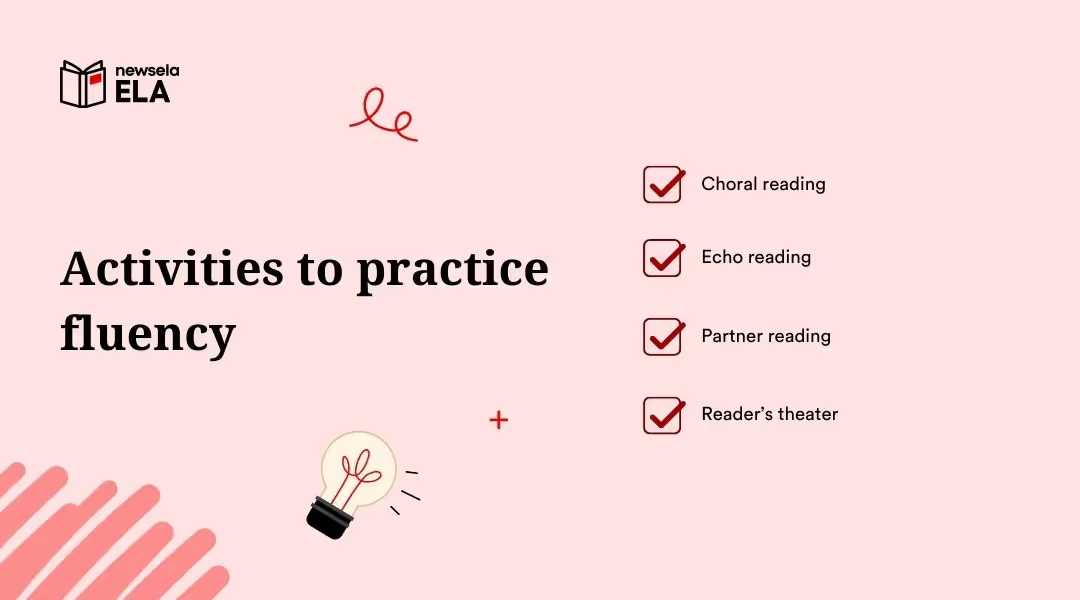
These routines help students develop pacing and expression while also reinforcing comprehension.
Fluency practice works best when students read meaningful texts rather than isolated sentences. When students read stories, informational articles, or context texts aloud, they’re practicing fluency while also building knowledge and vocabulary.
Vocabulary plays a huge role in how well students understand what they read. If students can decode every word in a passage but don’t know what those words mean, comprehension still breaks down.
Researchers have consistently found that vocabulary knowledge strongly predicts reading comprehension. Students with larger vocabularies are better able to understand complex texts and learn new ideas through reading. That’s why effective elementary literacy instruction includes intentional vocabulary teaching.
Instead of handing out long word lists to memorize, you may focus on:
For example, a class studying space may encounter words like “dark matter,” “gravity,” or “astrophysics” across several texts, discussions, and writing assignments. This repeated exposure helps students internalize vocabulary instead of memorizing it temporarily.
Digital tools can also help students access unfamiliar vocabulary while reading. Newsela articles include key terms powered by Luna, your AI teaching assistant. These highlighted terms provide definitions for subject-specific vocabulary directly inside the article, helping students understand important concepts as they read.
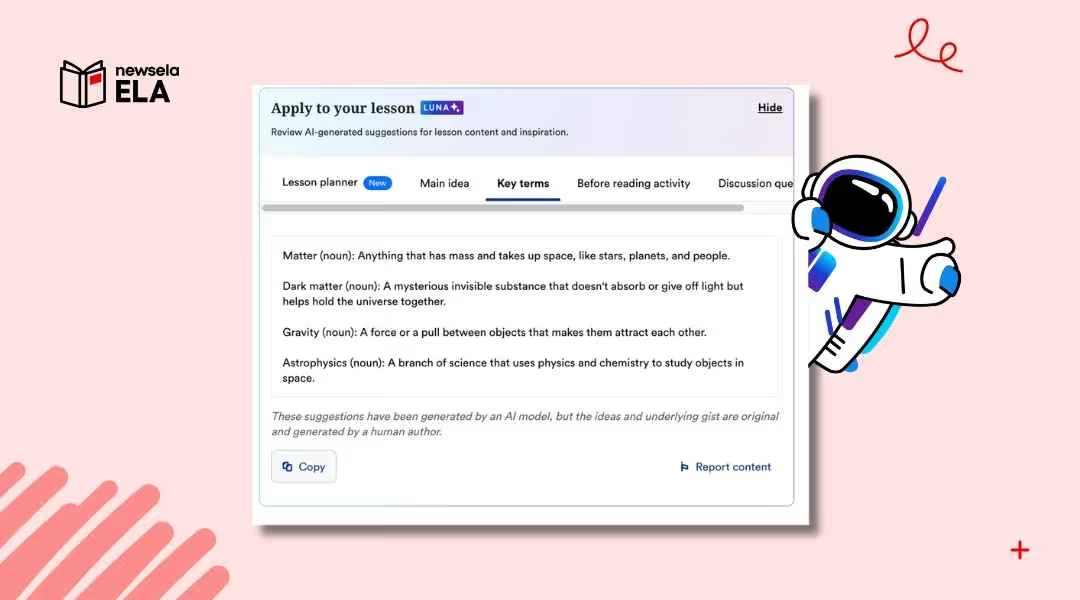
Newsela ELA also includes Power Words, which highlight Tier II vocabulary terms. These in-context definitions allow students to hear the words read aloud and include vocabulary activities to help students practice at the end of an article.
Read more: 15 Fun Ways To Teach Vocabulary
Reading comprehension is the ultimate goal of elementary literacy.
Students can decode words and read fluently, but if they don’t understand the meaning of the text, real reading hasn’t happened.
Comprehension is the point where all the other literacy skills come together. Researchers describe it as an interaction between the reader, the text, and the reader’s prior knowledge. In elementary classrooms, comprehension instruction often focuses on helping students think actively about texts. You can support this by asking students to:
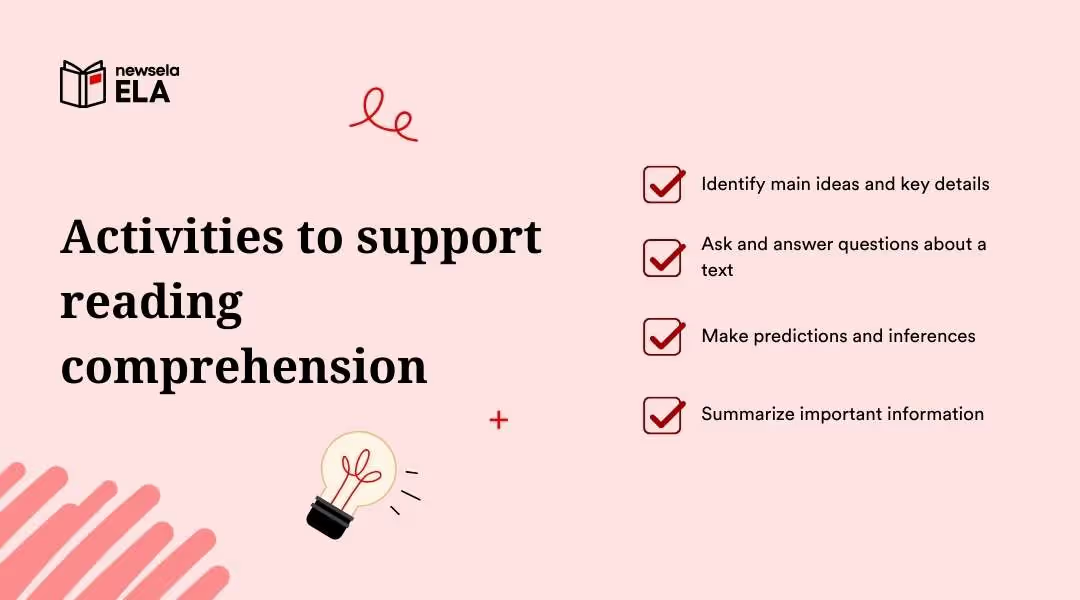
These activities help students move beyond simply reading words. They learn how to analyze ideas, connect information, and explain their thinking.
You can also combine comprehension practice with discussion and writing. When students explain their thinking or respond to a text in writing, they process content more deeply. Over time, these routines help students become readers who actively think about what they read, not just move their eyes across the page.
Key takeaways:
Strong elementary literacy classrooms run on a predictable daily structure. Students know when they’ll practice skills, when they’ll read, and when they’ll talk or write about texts. That consistency helps build reading stamina and keeps the focus on learning.
Many schools aim for a 90-minute literacy block, which gives you time to include everything in one lesson. And within that time, you’ll often combine several instructional routines.
The goal isn’t to create more lessons, but to structure the time you already have so students are reading, thinking, discussing, and writing every day.
An effective elementary literacy block provides students with daily practice in reading, writing, speaking, and listening. While the overall structure is similar across grades, the focus of instruction shifts as students grow.
In the early grades, students are still learning how written language works, so a larger portion of the time focuses on foundational skills. A typical K-2 literacy block may include:
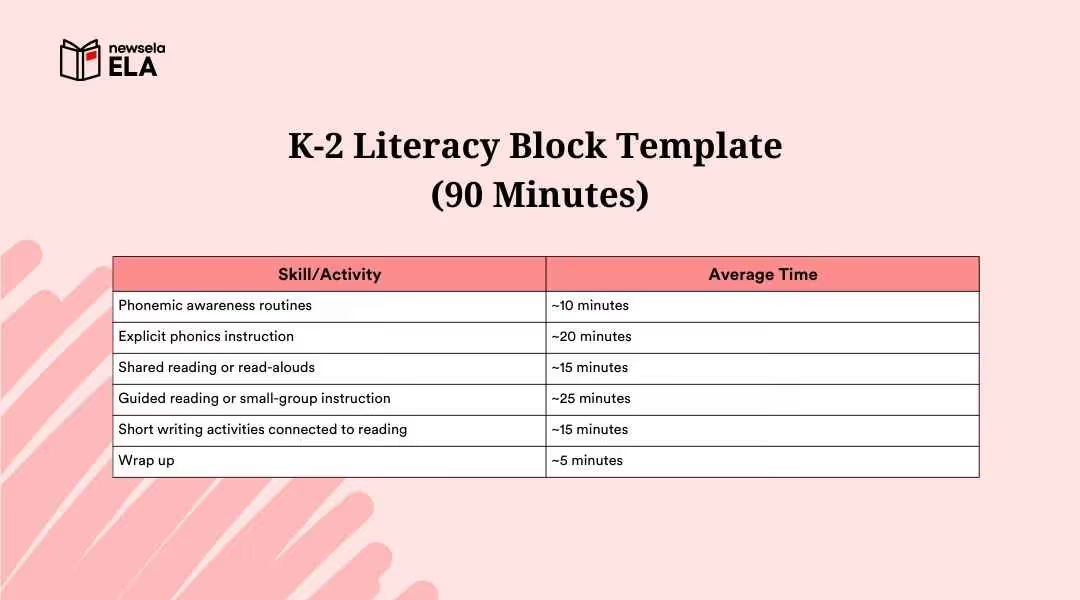
Once students begin to cross the “read to learn” threshold, you can increasingly use your reading blocks to teach new ideas across subjects. A typical 3-5 literacy block may include:
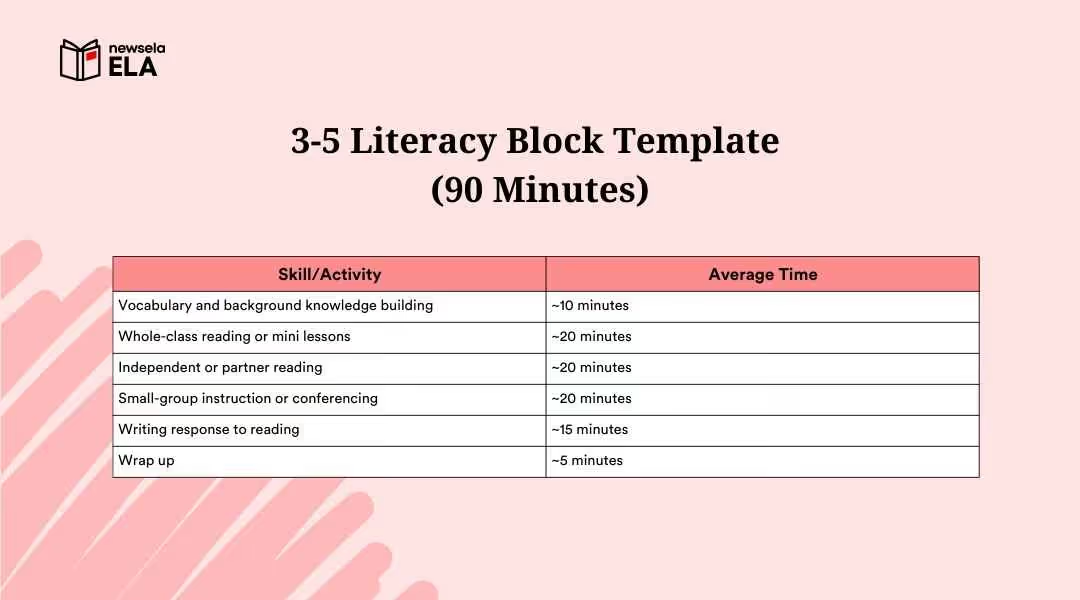
The exact structure may vary by grade level and student needs, but this type of structure helps ensure students practice multiple literacy skills every day. Over time, this consistent structure helps students build both reading skills and confidence in their learning.
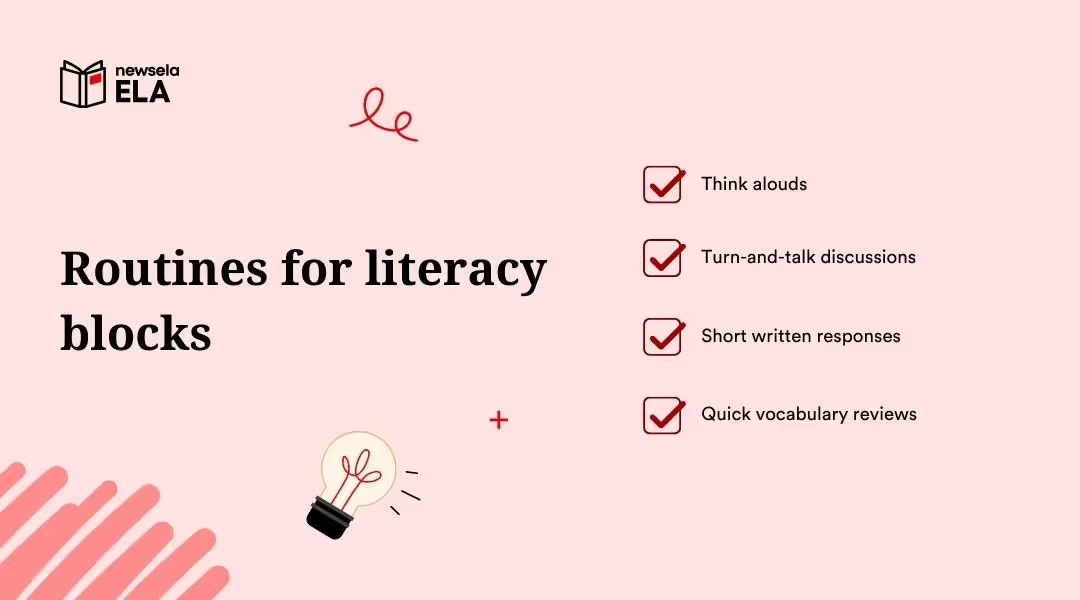
Daily literacy routines help students practice reading skills consistently and predictably. When routines stay the same, students spend less time figuring out what to do and more time focusing on the reading and writing work itself.
Over time, these routines build reading stamina, confidence, and stronger comprehension habits. You can use a few simple routines throughout your literacy blocks, like:
You may also consider using short launch activities at the beginning of a literacy block to activate thinking before students begin reading.
Generation Genius ELA video lessons inside Newsela ELA can introduce a literacy concept before students practice that skill. These short videos provide an engaging entry point, helping students start the lesson with a shared understanding of the concept.
While core routines stay similar across reading blocks, they often look slightly different across grade levels.
In K-2 classrooms, routines tend to be shorter and more teacher-led. Think-alouds during read-alouds, picture walks before reading, and structured partner talk help students understand how reading works.
In grades 3-5, routines often involve more independent thinking. Students discuss text evidence, write short responses, and analyze ideas from increasingly complex texts.
Literacy stations and small-group instruction help teachers differentiate reading instruction within the literacy block.
In most elementary classrooms, students aren’t all reading at the same level. Small groups allow you to target specific skills while the rest of the class works independently. Many literacy frameworks recommend small-group instruction because it allows you to adjust instruction more precisely.
During this time, students often rotate through literacy stations that reinforce reading and writing skills. Common stations include:
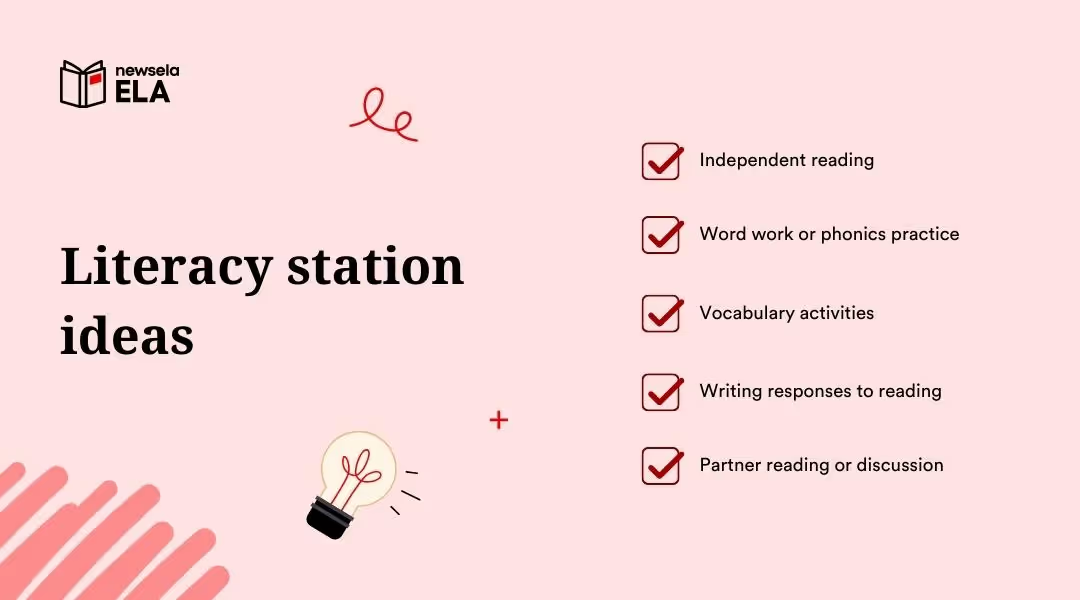
While students work at stations, teachers can meet with small groups to provide targeted instruction. This might include decoding practice, guided reading, vocabulary support, or comprehension work based on student needs.
The goal of literacy stations is to give students purposeful reading and writing practice while you provide targeted support where it’s needed most.
Reading across subjects helps students build the background knowledge and vocabulary that support stronger comprehension.
When literacy instruction only focuses on stories or short passages, students miss opportunities to learn about the world through reading.
When students read about science discoveries, historical events, or real-world issues, they practice reading skills while also building knowledge that makes future reading easier to understand. You can intentionally connect literacy instruction to topics from science and social studies by:
These types of lessons allow students to build knowledge while practicing reading and writing skills.
Tools like Newsela make it easier to bring content-area topics into literacy instruction. You can assign articles connected to science, social studies, or current events while still focusing on reading comprehension and vocabulary.
And, because Newsela provides texts at multiple reading levels, students across a class can explore the same topic while still getting appropriate reading support. This approach strengthens both literacy development and subject-area learning.
Key takeaways:
Strong elementary literacy programs come from schoolwide systems that support teachers and students.
Admins play an important role in creating the conditions that allow strong literacy instruction to thrive. That includes providing time for professional learning, ensuring teachers have access to high-quality texts, and supporting consistent instructional routines across classrooms.
When you create a school environment where teachers have the resources, training, and time they need to support reading development effectively, you’ll see students' understanding and achievement blossom.
The best elementary literacy programs happen when instruction aligns across grade levels.
When each grade builds on the skills students learned the year before, learners experience a clear progression from foundational reading skills in the early grades to deeper comprehension and writing work in upper elementary.
Administrators help create that alignment by supporting shared expectations for literacy. For example, your school could establish common practices like:
Leaders also support literacy growth by creating time for teacher collaboration. When teachers meet to discuss instruction, review student work, and plan literacy lessons together, they can identify challenges earlier and adjust instruction more effectively. Many schools use PLCs or grade-level planning meetings to support this type of collaboration.
Effective literacy instruction often improves when teachers have access to ongoing professional learning.
Reading research continues to evolve, and many teachers benefit from opportunities to deepen their understanding of how students learn to read and comprehend texts.
Professional learning (PL) that focuses on foundational reading skills, vocabulary development, and comprehension strategies can help teachers strengthen classroom instruction. PL also works best when it connects directly to classroom practice.
Instead of one-time workshops, many schools support literacy instruction through coaching, collaborative planning, and demonstration lessons. These approaches give teachers a chance to apply new strategies and reflect on what works with their students. Over time, ongoing professional learning helps teachers refine instruction and better support students at different reading levels.
Students build vocabulary and comprehension when they read a wide range of texts across topics and genres. That includes informational texts, historical topics, science concepts, and real-world issues.
Leaders can support literacy instruction by ensuring teachers have access to knowledge-rich texts that connect reading skills with meaningful content.
Many literacy frameworks recommend exposing students to both narrative and informational texts throughout the elementary grades. Informational reading, specifically, helps students build the background knowledge that supports comprehension across subjects. Leaders can support this initiative by:
Instructional platforms can also help expand access to these types of materials. For example, Newsela ELA provides thousands of classroom-ready texts and videos from a wide range of trusted content partners. These texts are available at five reading levels, so teachers can assign the same topic to a whole class while still supporting different reading abilities.
This type of access makes it easier for teachers to connect literacy instruction with science, social studies, and real-world learning.
Literacy data helps educators understand where students are thriving and where they may need additional support. When you regularly review reading data, you can identify patterns that may not be visible in individual classrooms.
School leaders often look at a combination of data sources, such as:
These data points can help educators determine whether students are developing key literacy skills, such as decoding, vocabulary knowledge, and reading comprehension.
National assessment data have shown that many students continue to struggle with reading proficiency. Results from the National Assessment of Educational Progress (NAEP) indicate that reading scores have declined in recent years, highlighting the importance of strong literacy instruction in elementary grades.
The goal of reviewing literacy data is to inform instruction. When data conversations focus on instructional improvement, they help teachers respond more effectively to student needs.
Consistent data reviews can help your school or district strengthen literacy instruction and ensure that more students develop the reading skills they need for long-term academic success.
Strong elementary literacy instruction doesn’t come from one program or strategy. It grows from consistent routines, meaningful reading experiences, and opportunities for students to think about what they read.
You already do so much to support this work, but having the right tools and resources can make it even easier to build engaging literacy lessons and reach students at different reading levels.
Newsela ELA helps you strengthen elementary literacy by providing:
Start your 45-day free trial of Newsela today and explore how differentiated texts, engaging video lessons, and built-in instructional supports can help every student grow as a reader.


Discover what the science of reading is and get answers to your questions about the framework and how to implement it at your school or district.

Discover what literacy knowledge is, why it matters for students, and get tips on how you can teach about the key components of it in the classroom.

Discover what ELA skills all students should learn and get tips and tools to help you promote differentiation, engagement, and progress tracking in any classroom.


.jpg)
.jpg)

.png)